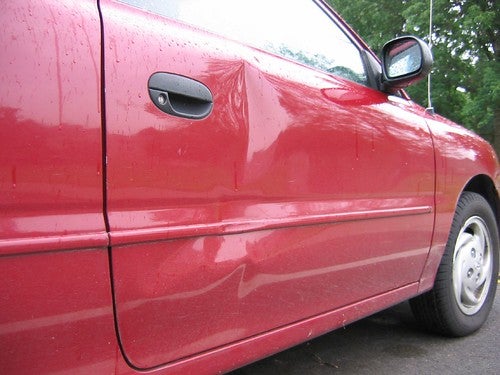
What do a rock, a tree branch, and a shopping cart have in common? They can ruin your car's exterior without the slightest provocation. Nearly every car owner has had one of these three things put an unsightly dent in their car's hood, fender, or door at some point. Worse yet, there are hundreds of other ways your car can be dented without ever being in an accident. Hail, a stray baseball, or even another car door can easily cause your car damage.
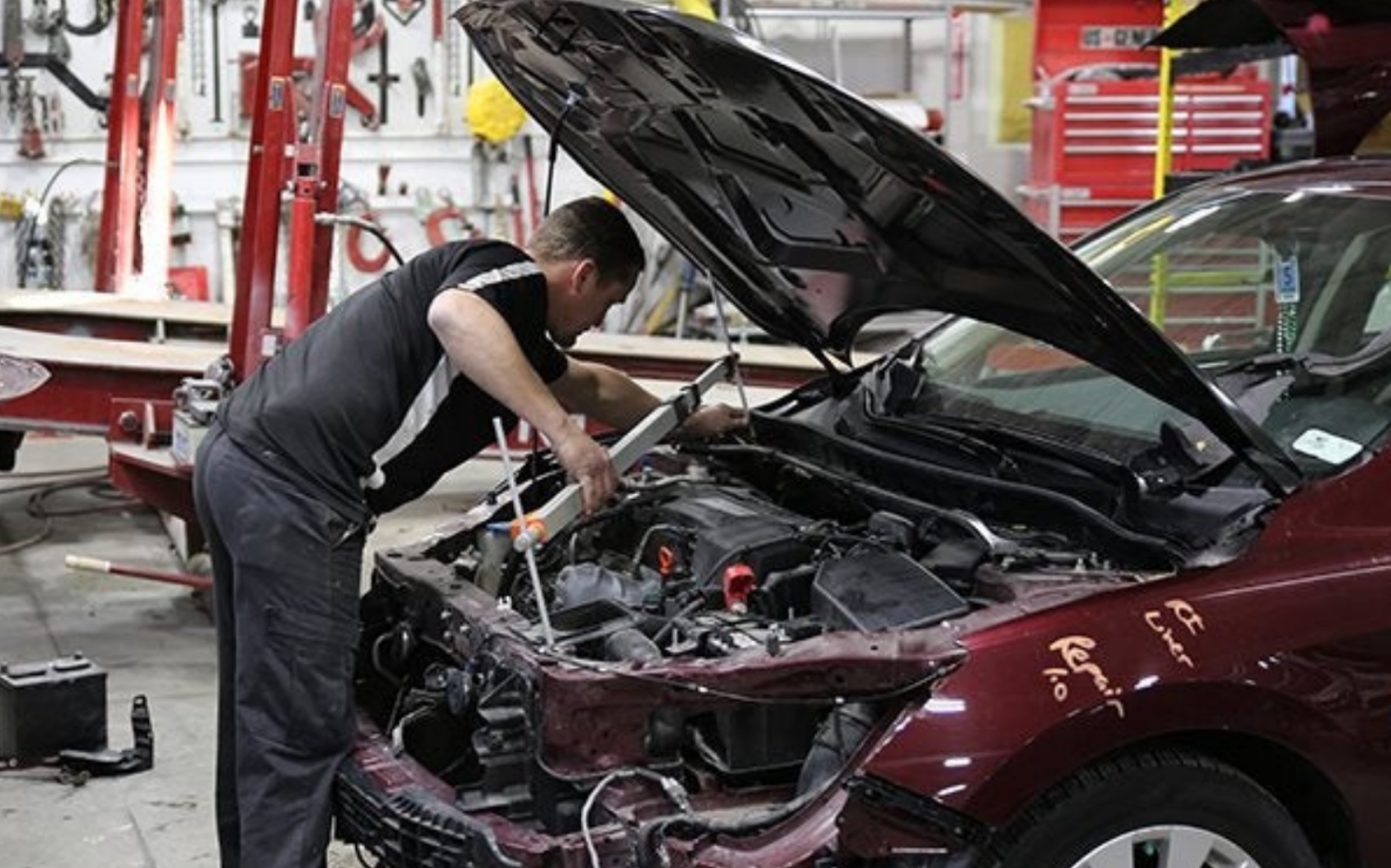
Many people simply live with the dent, believing it too expensive or too much of a hassle to fix — but it doesn't have to be either. At the Rydell Body Shop, we have a skilled team of factory-trained professional technicians and body repair specialists ready to fix that pesky little dent. We've dealt with dents of all kinds and will have your vehicle looking like new in no time. Keep reading to learn just how easy and inexpensive it can be.
Let's start with the basics of what a dent actually is. It's an indentation on your car's exterior surface that was caused by something striking it with force. It could be caused by the tree branch or shopping cart mentioned above, or it could be something else entirely. Your car's exterior is either aluminum, steel, or some other alloy that is firm, but not so rigid that it breaks when hit by something. Instead, the metal gives way leaving the dreaded dent.
Dents come in all shapes and sizes. Dents can be shallow and small, or they can be large and leave creases in the metal. The size of the dent is usually the biggest factor in determining the cost to repair it, though there are a few exceptions. Any significant damage to your car's paint will impact the cost as well. A shopping cart might strike your door panel and cause a dent. It might also hit at an odd angle and leave a scratch or crease running off the dent, which will make the damage more costly to repair.
The quality and condition of your car's original paint is a factor as well. Older cars will often have paint that chips or cracks when the vehicle is dented, compounding the problem. Older cars may also be made of thicker metals that are less flexible and resist being reshaped.
Traditional Dent Removal
The traditional method to repair a dent would consist of pulling the dent with a tool that actually causes more damage to the metal panel. Even without any additional damage, the process doesn't leave a smooth surface to work with. Body fillers would be used to smooth out the imperfections still there. After that, a sanding of the entire panel, hood, or whatever part was affected is necessary.
Then you must paint the entire part, first with a primer and then with a finish coat or two to achieve the proper color. Sometimes the part must be removed to paint; other times you would need to tape up the neighboring parts of the car. Either way, it's labor-intensive and costs money and time. Anticipate it taking anywhere from 2 days to a week or longer.
Paintless Dent Removal
Assuming there is no significant paint damage to your vehicle and all you need is to repair a dent, you should consider paintless dent removal. This is a less involved process than the traditional dent removal practices of years gone by. This is because today's vehicles are built with thinner gauge metals and polyurethane paints that are much more pliable.
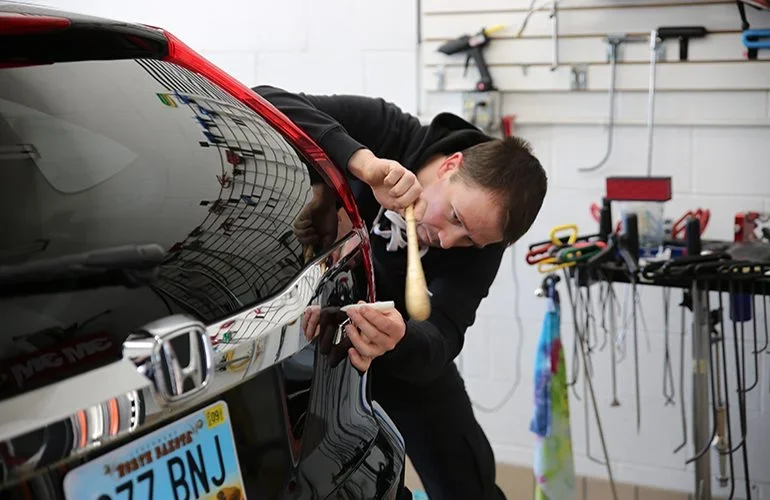
At Rydell Auto Group, our technicians use special tools designed to reshape the metal without harming the paint in the process. The job is done from the inside so there's no additional damage to your exterior. When the job is done, there is no sanding, painting, or body fillers. Your car is back to its original shape, and your paint is still intact.
What Types of Dents Can Be Repaired With Paintless Dent Removal?
As long as there are no signs of paint damage, the process can work on almost any size dent. Hail damage can usually be repaired this way, as can dents caused by road debris like rocks or gravel. Minor parking accidents and fender benders can effectively be repaired with paintless dent removal, as can a ding from another car door.
There are a few types of dents that cannot be fixed with paintless dent removal. Any dent that involves cracked or missing paint can't be fixed entirely with this method. The dent may be removed, but fresh paint will be required to fully restore your vehicle.
A double-walled metal panel can't be repaired this way either. Because this job is done from the inside, the interior wall will obstruct the process. Any sharp edges or creases that were created by the impact cannot be repaired with paintless dent removal, either. These creases and edges have compromised the metal so that it cannot be returned to its original smooth shape.
The Cost to Repair a Dent
As we said earlier, several factors come into play. Paintless dent removal is by far the least expensive way to repair a dent. It also takes less time and maintains the structural integrity of your vehicle's design better than alternative repair methods. You can expect a small dent to cost as little as $75 or as much as $500 depending on the size and location.
At Rydell Auto Group, we have one of the largest body repair shops in the region. All of our technicians are factory-trained to work with all types of vehicles. Our shop is an ASE and I-Car Gold certified body shop. We are also an OEM certified body shop for Nissan, Acura, and Honda and are Ford and Cadillac Aluminum certified.
Schedule Dent Repair at Our Grand Forks Body Shop
You can schedule your repair online or call us at 701-792-2846 with any questions you might have about our process. Our friendly, knowledgeable staff will answer any questions you might have regarding your repair. We can even work with your insurance company to help cover the claim.
Vehicle repairs can be annoying. More annoying are the repair costs that accompany sudden car problems, which can be devastating to your budget. The good news is that you don't have to spend a fortune on vehicle repairs. Check the following expert-recommended tips for saving money. Keep Up With Preventive Maintenance Prevention is always better than cure. This statement is also true when it comes to vehicle maintenance. You can take a few preventive measures to keep your car running smoothly and save money on repair costs. First, make sure that you check the fluid levels regularly. Low fluid levels can cause problems, which can result in expensive repairs. Replace the brake pads regularly. Worn-out brake pads can cause damage to the braking system and its components. Other maintenance practices include inflating the tires to the manufacturer's recommendations. Under-inflated tires may seem less of a problem, but they increase wear and tear on a vehicle's suspension and tires and negatively affect the gas mileage. Immediately repair glass chips, which are inexpensive to fix compared to replacing the entire windshield. Find a Trustworthy Service Technician The easiest way to overspend on car repairs is by using an untrustworthy repair shop, one that is unfamiliar with your vehicle model. When looking for a Grand Forks service technician, find individuals certified by Automotive Service Excellence (ASE). They should have certification in the area you need for repairs. For example, a technician certified to handle engine repairs may not be suitable for brake work. If you are looking for a trustworthy mechanic, visit Rydell Auto Group today to learn more about our auto repair services. Learn to Do Simple Vehicle Maintenance and Repairs You can save money on repair costs by learning to do simple vehicle maintenance tasks like changing oil and oil filters, wiper blades, and brake pads. If you have a driveway, garage, or other space at home, it is time to learn how to do some auto maintenance tasks yourself. Simple DIY tasks can save you a significant amount of money. The only cost you will incur is the parts, and you get to learn a few points about how your car operates. Armed with this knowledge, you can identify when something is wrong with the vehicle. Do Some Research When presented with a substantial car repair cost, it is wise to get a second opinion. To start, ensure that you understand every detail of the proposed repair work. You can only identify unnecessary items if you do some research. Check the internet for free diagnostic resources to verify that you're being charged correctly for repair work. It is also imperative that you check whether your vehicle model offers available warranty programs. For example, some manufacturers have increased their powertrain warranty from the basic three-year, 36,000-mile warranty to a six-year, 72,000-mile warranty. Some include a lifetime warranty. If you have a warranty for your vehicle, you will not pay for any repairs. Check the Owner's Manual Taking the time to familiarize yourself with your car's maintenance schedule can help you save money on repairs. You can save hundreds or even thousands over your vehicle's lifetime. Your vehicle's owner's manual may provide a recommended maintenance schedule you can consult at regular intervals. Never Procrastinate It is always advisable to act when you note something is not working right with your vehicle. Waiting makes the problem worse, and it can be more expensive to have the repair done. Always bring your car to your trusted mechanic when you spot a problem with your vehicle to avoid more expensive repair costs. Opt for Local Shops Instead of National Chains All vehicle owners have services shops that they frequent, either because individuals like the mechanic or the service shop are convenient for them. Most car owners tend to use national chains when going for small mechanical services and jobs. Nothing is wrong with this choice, but you are less likely to get the same level of service offered at a local shop. Local shops tend to provide better service, get the job done right the first time you visit and offer a competitive price. Local shops will continually provide you with quality service. They will also identify any problems with your vehicle immediately as they have the time to learn more about the model and how to troubleshoot any issues. Buy Used Parts You can save some cash by buying used parts. The best place to start looking for inexpensive items is a used parts specialist. Many parts rarely wear out, which makes used parts almost as good as new and much cheaper. Body trim and interior parts like rearview mirrors and radio knobs are examples of used parts that you can buy. Often, they cost less than half the price of new parts. Other used parts that you can buy are transmissions and rebuilt engines. Typically, these parts come with warranties, so you can be sure of what you are buying. You can also buy discounted parts online. Most parts available online sell at a very competitive price. Avoid Duplicate Labor Charges At times, your mechanic may have to remove several parts to reach the element causing problems in your vehicle. This service work presents an opportunity to save money on future repairs by doing them now. For example, a repair on a squealing drive belt may suggest changing the lower and upper radiator hoses, thermostat, and water pump. These changes require the mechanic to remove some of these parts to access the drive belt. If the mechanic was charging a flat price for each part replacement, you could bargain with the mechanic to reduce labor costs. When it comes to auto repairs, you can save significant amounts of money. The list provided here gives you a starting point if you want to save money on car repairs. If you are thinking about buying a new vehicle, you can contact us at Rydell Auto Group, and we can get a quote ready for you.
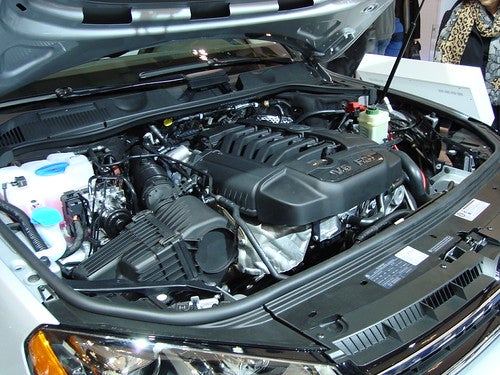
Engine maintenance is one of the most important types of automotive care you can provide to your vehicle. Your engine is the workhorse of your car, truck, or SUV, and keeping it clean allows it to operate at its best. If you're curious about the benefits of cleaning an engine and how to do so, this guide can help you. Should You Clean Your Engine? Image via Flickr by Mike Babcock via CC BY 2.0 Cleaning your engine is an important part of automotive maintenance. A clean engine runs more efficiently and experiences reduced damage during operation. A clean engine can also help to lower your costs in the short-term through fuel efficiency and in the long-term by avoiding engine damage. How to Clean the Inside of Your Engine The most important consideration when cleaning your engine is looking at its insides, as this allows it to operate cleanly and effectively. Here's what you need to do in order to clean the inside of your engine: Check your coolant. The first consideration when cleaning your engine is preventing debris from gathering in the first place, which starts with checking the fluids running through it. When you check your coolant levels, also note the appearance of the coolant in your reservoir. If it appears cloudy or dirty, it is beneficial to change your coolant out with clean coolant to prevent it from injecting debris into your engine. Get your oil changed. Another important fluid to monitor is your engine's oil. When you receive an oil change, it's common to provide a mileage reading when you need to get it changed next. It's important to remain up-to-date with your oil changes in order to keep the oil in your engine cleaned to prevent it from causing clogs or damage to the engine. Use a fuel additive. A fuel additive provides a simple way to clean out your engine. Simply top off your tank, then add the additive to your fuel reservoir according to the instructions on the bottle. The additive works to break down harmful deposits within your engine in order to help it run more cleanly and efficiently. Get a tune-up. The best way to care for your engine is to take it in to see a service professional for a tune-up. By staying on time with your routine automotive maintenance, you allow professionals to examine your vehicle for any potential signs of trouble. They can alert you to any concerns about your engine and provide it with professional-level care to keep it running cleanly. How to Clean the Outside of Your Engine Although a lower priority than the inside of your engine, cleaning up its outside can still make it more presentable and help to minimize its exposure to potential damage. Follow these steps when cleaning your engine: Let it cool off. If you have recently been driving your engine, it's important to let it cool off before doing any work on it. Engines can reach temperatures hot enough to severely burn you, so turning off your vehicle and allowing it to rest–with the hood up if possible to speed up the process–allows you to work on it safely. Clear away debris. When cleaning your engine, it's helpful to begin with removal of any easy-to-clear debris. If there are any leaves or other small items that have gotten under your hood, or loose dirt on the engine, brush the debris away gently so that only stuck-on dirt and debris remain. Check your seals. Before using water underneath your hood, it's important to make sure that you protect any exposed wiring. Most modern vehicles that are vulnerable to water come with sealed components. However, it's beneficial to examine your engine to look for any areas where there are damaged seals and water can get into electrical wiring. It's important to do this in order to avoid short-circuiting the electrical system of your engine. Run the car. In order to remove stuck-on debris from your engine, it's beneficial to warm it up first. This can help to loosen any buildup on your engine and make it easier to remove. Running the engine for 10 to 15 minutes after it has cooled down should provide you with enough warmth to loosen buildup without making the engine dangerously hot to the touch. Degrease the engine. Once your engine is warm, turn off your vehicle and begin applying a degreaser. Start from the bottom of the engine and work your way up, applying it to any areas where grease or debris accumulated on your engine. The degreaser loosens build-up and makes it easier to clean your engine. Brush the trouble spots. Although degreaser is an effective tool when cleaning your engine, some areas of stuck-on grime may require additional attention. Scrubbing the grease spots with a cleaning brush allows you to break up any stubborn spots prior to rinsing. Rinse it off. After you have completed degreasing and brushing, all that's left is to rinse off your engine to clear away the debris that you loosened. You don't need to powerwash your engine, as the brush and degreasing agent work better to clean off the dirty areas. Set your hose to a gentle flow and rinse your engine from the top down to clear away the build-up. Dry it down. Once you have finished rinsing your engine, you can leave it to dry for several minutes. If the engine is still warm from running, drying it will help to evaporate some of the remaining liquid. After allowing any light surface accumulation to dry, wipe the engine down with a dry towel or rag to speed up the drying process for any areas where more water accumulated. The best way to ensure you get a high-quality cleaning for your engine is to bring your vehicle to a service center and request a professional cleaning. With experienced professionals cleaning your engine, you know it is well-protected and receives a high quality clean every time. Get Your Engine Serviced in Grand Forks with Rydell Auto Group Rydell Auto Group is proud not just to be Grand Forks' premier automotive dealership group, but also a premier automotive service provider. If your engine needs cleaning, our service team can help. Call us up or contact us online to schedule your appointment for an engine cleaning today. We will get your engine looking and running as good as new!
From a flying rock to a collision to hail, many things can put a dent on your vehicle as you drive around in Grand Forks. Regardless of the size of the dent, it's important to fix it as soon as possible so that it won't lead to rust and other issues. Before you go to a local body shop, you may want to know what repair options you have, how the technicians will fix your car's dent, and how much you can expect to pay. Check out this helpful guide to learn more about dent repairs at a body shop. Why You Should Fix Your Car Dents Sooner Rather Than Later Dents aren't only cosmetic blemishes, but they can escalate into other problems that can be costly to repair. The following are a few reasons why you should fix any dents on your car right away: Prevent rust: If an impact results in a crack, water can seep underneath your vehicle's paint and reach the unprotected sheet metal. Subsequently, it'll cause the metal to oxidize, which in turn leads to rust spots. The rust spots will expand in size over time, making them costlier to repair. Avoid long-term paint damage: Fixing a car dent usually involves more than just hammering out the dent. You may also have to repair the paint if there are scratches or cracks in the dented area. Everyday wear and tear and weather elements can cause the cracks to grow larger. As a result, the paint may peel or flake, leaving the bare metal exposed. Peeling paint can spread quickly and become a very expensive problem. Improve safety: Dings and dents may result in underlying structural damage that can jeopardize your safety on the road. For instance, if you're involved in a front- or rear-end collision that causes damage to the quarter panel, it can bend the underlying metal. This can make your vehicle more unstable and difficult to control, which increases your accident risk. How Does a Body Shop Fix Car Dents? The process of repairing a car dent may vary from one body shop to another, but it usually involves a few common steps. In most cases, a technician will start by cleaning the dented area so that they can clearly see the extent of the damage. The next step is to determine whether it's better to repair the dent or replace the entire panel. The technician will check if the dent is badly kinked. If it has kinks that bend at an angle of more than 90 degrees, replacing the part is usually a better option. If the dent can be fixed, they'll consider how long it'll take to get the job done. Replacement is often more economical if it takes a lot of time and labor to fix the dent. If the technician decides that repairing the dent is the way to go, they may use one of several tools or techniques to pull out the dent, such as a plier, hammer and dolly, stud welding, or a big suction cup. After pulling out the dent, they may have to apply a filler and hardener to smooth out the surface of the affected area. Then, the technician will sand the area and paint it with a matching color. For dents that didn't cause any paint damage, the paintless dent repair (PDR) process may be preferable. This process involves gaining access to the backside of the dented area through a window, a headlight or taillight, or small access holes in a door jamb. Sometimes, it may be necessary to remove paneling from the inside of the car. Once they're able to reach the dent, the technician will use metal rods to massage the metal until it returns to its original shape. How Much Does Dent Removal Cost? Image via Flickr by H. Michael Miley via CC BY-SA 2.0 Basically, the larger or deeper the car dent, the more you can expect to pay to get it fixed. A small ding can cost you as little as $50, while a deep one can set you back about $125. If your vehicle has sustained a medium-sized or large dent after colliding with another vehicle or a pole, the repair cost should be $200 to $300. Generally, the price of removing a dent that doesn't require painting is $50 to $120 per inch. For a car dent that needs to be painted, you have to be prepared to pay an additional $200 to $500. If the paint damage is too severe and costs more than $1,000 to fix, you may be better off replacing the whole panel. The cost of replacement can vary depending on which part you need to change. Getting a new bumper can run $300 to $700, whereas a new door can cost you more than $1,000. Why You Should Go to a Certified Auto Dealership for Dent Repair When you're looking for a place in Grand Forks to fix your car dent, it's essential that you don't sacrifice quality for price. Body shops that offer cheap prices may use below-par equipment, low-quality paints, and inadequately trained technicians to perform dent repairs. They can make a variety of mistakes that can ruin your car's appearance, such as color mismatching, blotching, over-spraying, sagging or running paint, or inconsistent textures. The best thing to do is to bring your vehicle to a reputable auto dealership that offers high-quality dent repair services. Such a dealership has a certified service center that complies with the stringent standards of the manufacturer it represents and uses the most advanced equipment for all kinds of auto repair procedures. In addition, the service center has a team of factory-trained technicians who have extensive experience working on your make and model of vehicle. Therefore, they know how to use the right method to fix the type of dent you have and choose the paint color that perfectly matches your vehicle. If you need to replace a bumper or panel, a dealership can provide you with a genuine OEM part. If you're looking for top-notch dent repair services in Grand Forks, consider going to one of the Rydell dealerships, such as Rydell Chevrolet Buick GMC, Rydell Cadillac, or Rydell Honda Nissan. Contact us today to make an appointment.
Contact Us
Fill out this form below and we'll contact you shortly